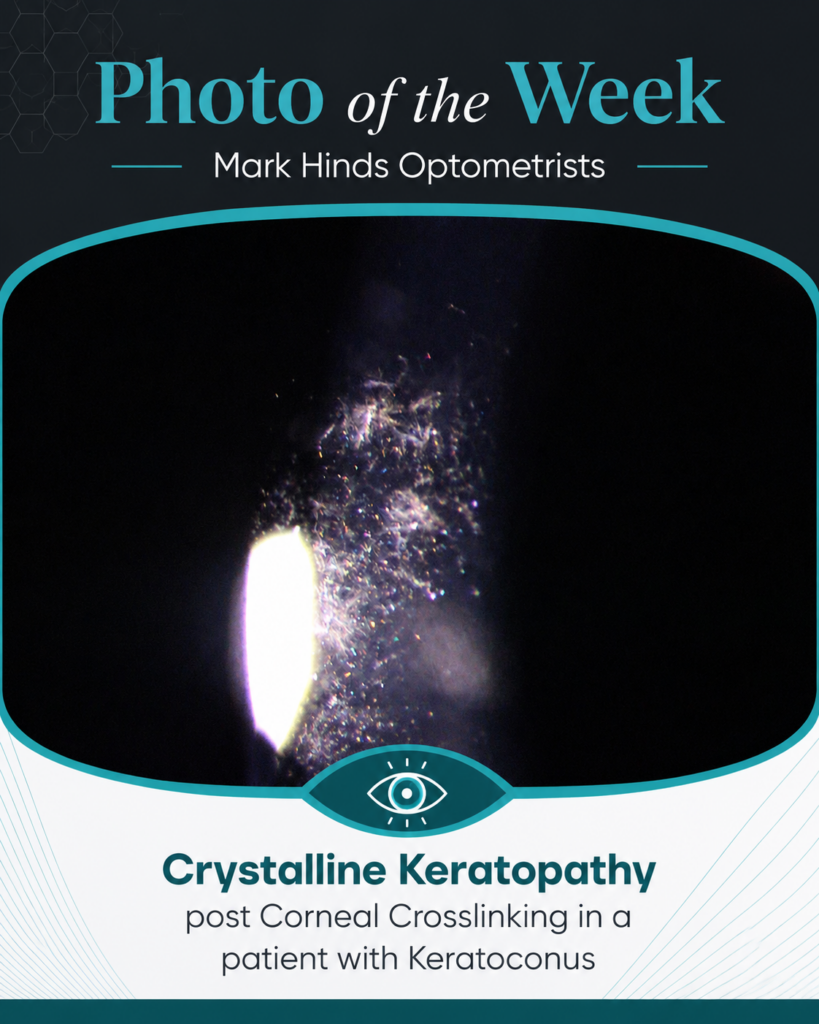
Crystalline keratopathy after corneal collagen crosslinking is not usually caused by the crosslinking reaction itself. It generally comes from one of two mechanisms: sterile drug precipitation or infectious crystalline keratopathy.
In an epithelium-off CXL, the epithelial barrier is removed, the anterior stroma is exposed, and a bandage contact lens plus frequent drops are commonly used. That creates the conditions for topical medications to precipitate into the anterior cornea, especially fluoroquinolones. Ofloxacin, the active drug in Ocuflox, has been reported to form corneal precipitates, particularly when there is an epithelial defect, ocular surface compromise, polypharmacy, altered tear pH, or delayed epithelial healing. In that setting, the deposits may appear as fine white or refractile anterior stromal/subepithelial crystals and may improve after stopping the offending drop.
However, post-CXL crystalline keratopathy can also be infectious, with branching, needle-like stromal opacities caused by organisms growing within stromal lamellae. There are rare cases post-CXL presenting about four weeks after treatment with pain, redness, epithelial defect and branching crystalline infiltrates.
Ocuflox crystallising in the anterior cornea is plausible, especially early and with delayed epithelial closure, but infection must be excluded if there is pain, redness, epithelial defect, progression, or inflammation.