Paediatric Optometry
Children’s Eye Examinations at Mark Hinds Optometrists
Supporting Vision, Learning & Development
At Mark Hinds Optometrists, we understand how important vision is for a child’s development, education, confidence, and everyday life.
Children experience and learn about the world primarily through vision. In fact, approximately 80% of learning is visual. Clear and comfortable vision plays a critical role in:
- Reading and learning
- Concentration and attention
- Hand-eye coordination
- Sporting performance
- Social interaction and confidence
A child may not always realise they are having vision problems, which is why regular eye examinations are so important.
Our experienced optometrists provide comprehensive paediatric eye examinations tailored specifically for children and adolescents in a relaxed and supportive environment.
We are also proud to be part of the Paediatric Optometry Alignment Program with the Queensland Children’s Hospital.
More Than Just an Eye Chart
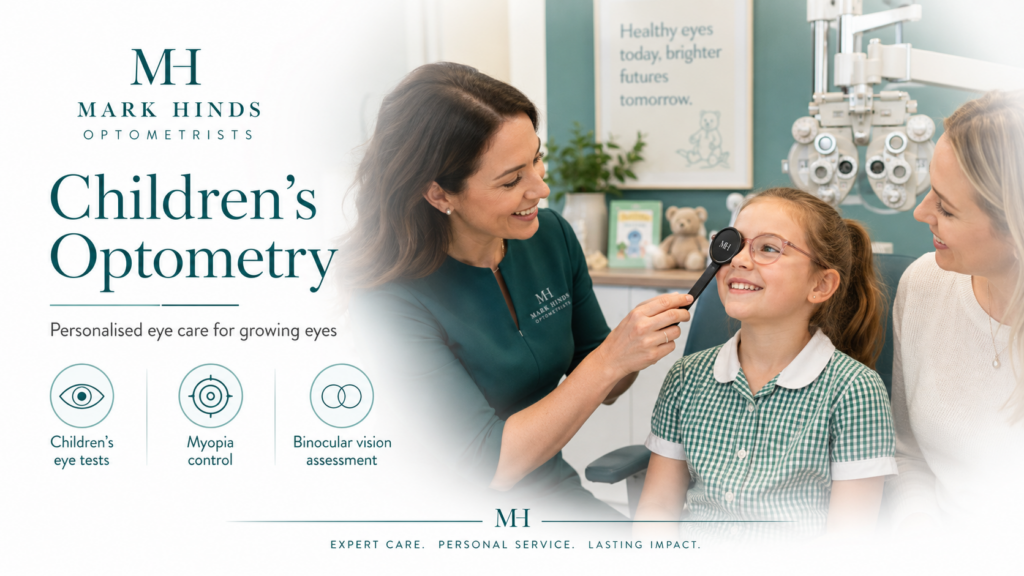
Children’s eye examinations involve much more than simply reading letters on a chart.
A comprehensive paediatric eye examination allows us to assess:
- Vision clarity
- Eye focusing ability
- Eye coordination and tracking
- Visual development
- Eye health
- Myopia progression risk
- Learning-related visual issues
Our goal is to identify any visual concerns early and provide practical, evidence-based solutions tailored to your child’s needs.
1. Visual Acuity & Prescription Assessment
Visual acuity refers to how clearly your child can see at distance and near.
Reduced vision may be caused by refractive errors such as:
- Myopia (short-sightedness)
- Hyperopia (long-sightedness)
- Astigmatism
Blurred vision can impact:
- Classroom learning
- Reading performance
- Sporting activities
- Confidence and concentration
Reduced vision can also sometimes indicate:
- Strabismus (eye turn)
- Amblyopia (“lazy eye”)
- Eye disease or other ocular conditions
Our examinations help determine not only how clearly your child can see, but also how much effort is required to maintain clear vision throughout the day.
2. Visual Efficiency & Eye Teaming
Clear vision is only part of the picture.
We also assess how efficiently the eyes work together during tasks such as reading, learning, and screen use.
This includes evaluating:
- Eye tracking
- Focusing ability (accommodation)
- Convergence and binocular coordination
- Sustained visual performance
Reduced visual efficiency may contribute to:
- Eye strain and fatigue
- Headaches
- Difficulty concentrating
- Reading discomfort
- Reduced attention span
- Intermittent blurred or double vision
When required, management may include:
- Spectacles
- Vision support strategies
- Myopia management
- Eye exercises or visual training recommendations
3. Ocular Health Assessment
A thorough ocular health examination is an important part of every child’s eye test.
This assessment is completely painless and allows us to evaluate:
- The front and back of the eyes
- Retina and macula health
- Optic nerve appearance
- Eye growth and development
We also utilise advanced digital imaging technology to document your child’s ocular health for future comparison and long-term monitoring.
At our clinic, we are committed to early detection and proactive management of eye conditions whenever possible.
Myopia Control & Children
Myopia (short-sightedness) is becoming increasingly common in children worldwide.
At Mark Hinds Optometrists, we provide evidence-based myopia management options aimed at slowing progression and protecting long-term eye health.
Treatment options may include:
- Orthokeratology (Ortho-K)
- Low-dose atropine
- Myopia control spectacle lenses
- Lifestyle and outdoor activity recommendations
- Axial length monitoring
We use advanced technology including the Pentacam Wave + AXL to assist in monitoring eye growth and corneal health.
For more information, visit our:
- Myopia Control page
- Orthokeratology (Ortho-K) page
Contact Lenses for Children & Teenagers
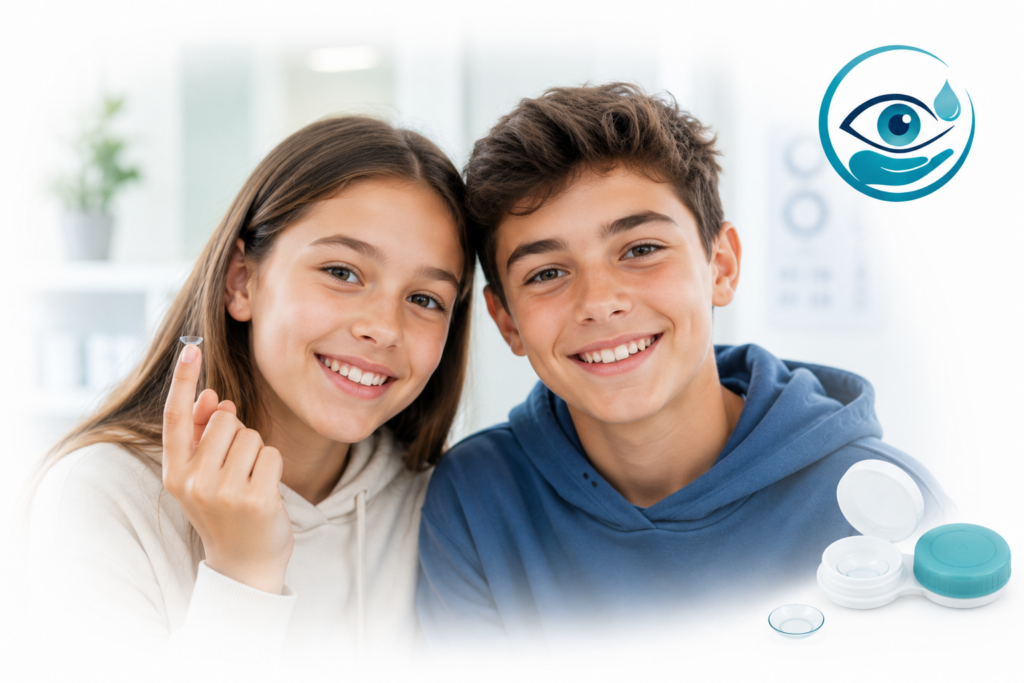
Many children and teenagers are excellent candidates for contact lenses.
We fit a wide range of contact lens options including:
- Daily disposable contact lenses
- Sports contact lenses
- Orthokeratology (Ortho-K)
- Specialty lenses for keratoconus
- Hybrid contact lens designs
For active children involved in sport, dance, or outdoor activities, contact lenses can provide excellent vision, convenience, and confidence.
Our experienced contact lens team carefully assesses suitability and provides detailed education and ongoing support for both children and parents.