Symptoms of Dry Eye

The tear film is a very important layer on the ocular surface which maintains the smoothness of the surface for good vision and comfort. It is made up of three layers: Mucin, Water and Lipid. A disturbance in the balance of all three components can lead to symptomatic dry eyes.
A common problem, dry eye disease affects more than 20% of the global population with symptoms only increasing with age. Conditions of a modern lifestyle including extended exposure to glaring digital screens, driving, artificial lights, air pollutions and contact lenses make Dry Eye Disease (DED) even more common. Generally, DED is a result of a tear film issue, either caused by insufficient tears or excessive evaporation.
DED is an unpleasant sensory and emotional experience. Burdened with discomfort and fear, patients often feel miserable, not knowing how to precisely describe what they are feeling, often exasperated because no-one understands. Mild conditions can lead to frequent visits to the eye care practitioners whereas moderate to severe cases is often associated with significant pain, limitations (ocularly/visually, physically and socially), reduced vitality, poor general health and in some cases depression.
The signs and symptoms common to DED (in either one or both eyes) are as follows:
- An ocular stinging, burning or stretching sensation.
- Stringy mucus in or around your eyes.
- Photophobia (Sensitivity to light)
- Eye redness
- A sensation of having something in your eyes.
- Difficulty wearing contact lenses.
- Difficulty with night-time driving.
- Watery eyes (Which is your body’s response to the irritation of dry eyes)
- Blurred vision.
- Eye Fatigue.
DED is an ocular surface disease that occurs when natural tears are unable to provide adequate lubrication for the eyes, which are vital to your overall ocular health. With each blink, a protective coating of tears is spread like a film over the front of the eyes. However, when there is inadequate or an imbalance of tears, dry eyes are often the result.
Tear imbalances are most commonly caused by blockages in the meibomian glands in the eyelids. These small glands produce essential oils that form the top layer of the teat film and are an essential protective element to your eyes, crucial to long-term ocular comfort and health. Blocked meibomian glands can compromise the effectiveness of the tear film, exposing the ocular surface and increasing the changes of experiencing the many discomforting symptoms of dry eye.
How We Manage it:
E-Eye Intense Regulated Pulsed Light (IRPL):
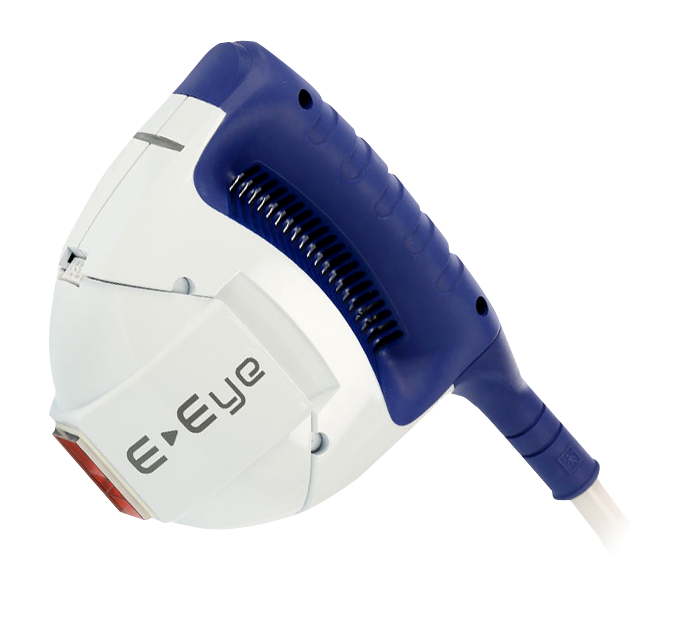
It has been proven in several neurological studies that the emission on a nerve infrared as a train of pulses leas to the creation of a micro gradient of temperature between the inner and outer layer of the myelin sheath. This micro gradient of temperature triggers the liberation of neurotransmitters. Autonomically, the parasympathetic nerve is connected to the Meibomian glands by some of its branches. The neurotransmitters released will then be able to interact with the glands, stimulating the secretion and the contraction of the latter. E-Eye does not directly affect the Meibomian glands, rather its action is indirect. The “Flashed” areas (buy orbital and zygomatic region) are the areas where the parasympathetic nerve pass.
E-Eye is a medical device that has been specifically designed for treating DED due to MGD. It generates IRPL by producing perfectly calibrated and homogeneously sequenced light pulses. The sculpted pulses are delivered under the shape of a train of pulses. The energy, spectrum and time period are precisely set to stimulate ethe Meibomian glands in order for them to return to their normal function. E-Eye is a medical solution to treat and prevent dry eyes with MGD. See the images below:
How IRPL works
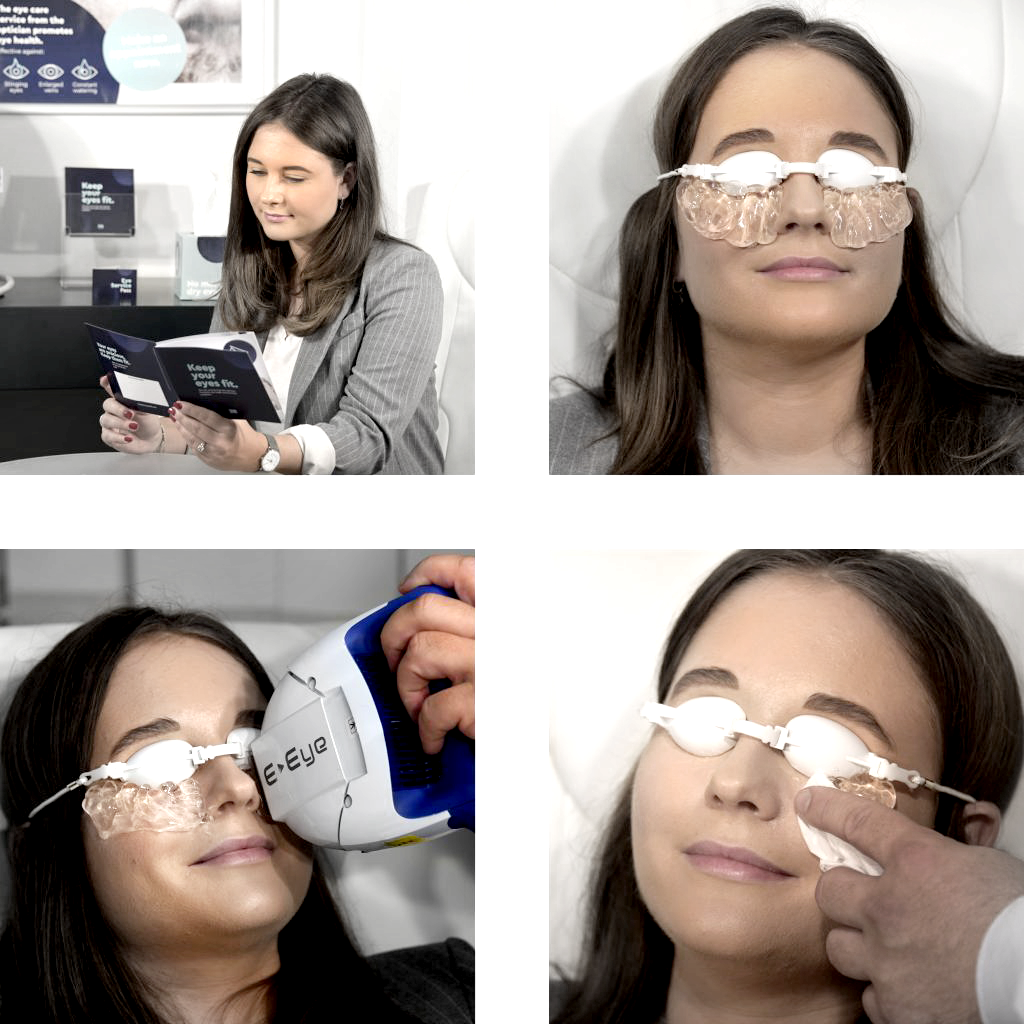
The dry eye treatment with E-Eye only takes a few minutes, sitting in our custom zero-gravity massage chair. The eyes from the patient are covered by protective eyecups. Hydrogel (ultrasound gel) is applied to the lower eyelid. A series of light pulses is performed gently around the lower eye, a non-invasive and painless procedure (repeated the same way for both eyes). The aim of the treatment is to restore the normal activity of the Meibomian gland. The effect of the first two treatments last from a few days to up to 2-3 weeks. After we get into a routine with multiple treatments under our belt, the long-lasting effect is expected for a minimum 6 months to 3 years. The E-Eye protocol comprises of three to five sessions. It is recommended to repeat one application once symptoms are coming back – generally a top up every 6-9 months helps keep the patient asymptomatic.
Result of Treatment
As a result, the dry lipid layer receives a natural boost of lipids, which reduces the evaporation of tear fluid and prevents the eye from drying out. In addition, the quality of glandular secretions is improved, and the tear film’s lipid layer is stabilised. This significantly improves teak break up time and decreased symptomology of the dry eye secondary to MGD.
BlephEx Treatment
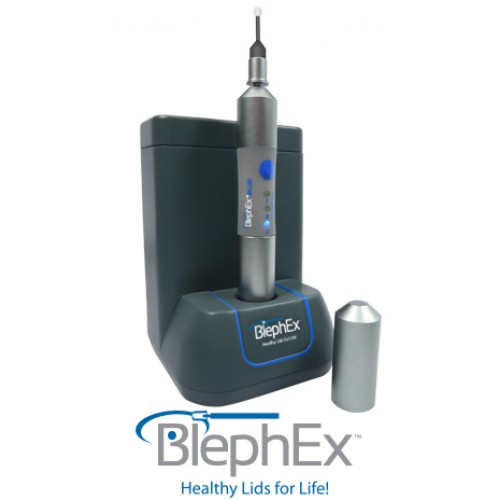
BlephEx is an effective and safe treatment for blepharitis, aimed to eliminate the discomfort and irritation it causes.
Blepharitis, is a common condition characterised by inflammation of the eyelids, can lead to symptoms such as redness, itching and a gritty sensation in the eyes. If left untreated, it can even contribute to more serious eye problems. We understand the impact the blepharitis can have on your daily life, which is why we are committed to providing effective solutions to help you achieve clearer and more comfortable vision.
The incidence of blepharitis in the general population can vary depending on the demographics studied and the diagnostic criteria used. However, blepharitis is considered to be a relatively common condition affecting a significant portion of the population worldwide.
Studies have suggested that the prevalence of blepharitis ranges from around 20-50% in various populations. It tends to be more prevalent in older individuals, with increasing age being a significant risk factor. Other factors such as gender, ethnicity and environmental factors may also influence the incidence of blepharitis. Women over 40 and people who wear makeup and/or contact lenses are some of the specific demographics more susceptible to blepharitis.
Additionally, certain medical conditions such as rosacea and seborrheic dermatitis are often associated with a higher incidence of blepharitis. Individuals with conditions like DED or meibomian gland dysfunction also have an increased risk of developing blepharitis.
Overall, while exact figures may vary, blepharitis is considered to be a common condition affecting a substantial portion of the general population, highlighting the importance of effective management and treatment options. Regular eye examinations and proper eyelid hygiene are essential for preventing and managing blepharitis to ensure optimal eye health and comfort.
With BlephEx, we offer a comprehensive and non-invasive approach to managing blepharitis. This advanced treatment method utilises state-of-the-art technology to gently and precisely remove debris, bacteria and biofilm buildup along the eyelid margin. By thoroughly cleansing the eyelids, BlephEx helps to alleviate inflammation, reduce symptoms and promote overall eye health. This procedure can be performed in conjunction with IRPL treatment.
What sets BlephEx apart from its competition is its precision and effectiveness. Unlike traditional methods that may only provide temporary relief, BlephEx offers long-lasting results with regular treatments. Our experienced optometrists and dry eye practitioners will customise the treatment/treatment plan to suit your individual needs, ensuring optimal outcomes and enhanced comfort.
At Mark Hinds Optometrists, your eye health and satisfaction are our top priorities. That’s why we strive to stay at the forefront of technology and innovation in optometry. With BlehpEx, we can offer our patients cutting-edge solutions for managing blepharitis and to assist in maintaining healthy eyes for as long as we can.
References:
https://www.ncbi.nlm.nih.gov/pmc/articles/PMC4298157/
https://pubmed.ncbi.nlm.nih.gov/34353073/
https://pubmed.ncbi.nlm.nih.gov/33121905/
https://bmcophthalmol.biomedcentral.com/articles/10.1186/s12886-022-02531-7
https://pubmed.ncbi.nlm.nih.gov/28496300/
Our Teams Published Work
Efficacy and safety of AZR-MD-001 selenium sulfide ophthalmic ointment in adults with meibomian gland dysfunction: A vehicle-controlled, randomized clinical trial
- Stephanie L. Watson, Lydon W. Jones, Fiona Stapleton, Mark Hinds, Alison Ng, Jacqueline Tan, Yair Alster, Charles Bosworth, Omer Rafaeli, Venita DePuy : The CELESTIAL STUDY Group
The Ocular Surface (Volume 29, July 2023, Pages 537-546)