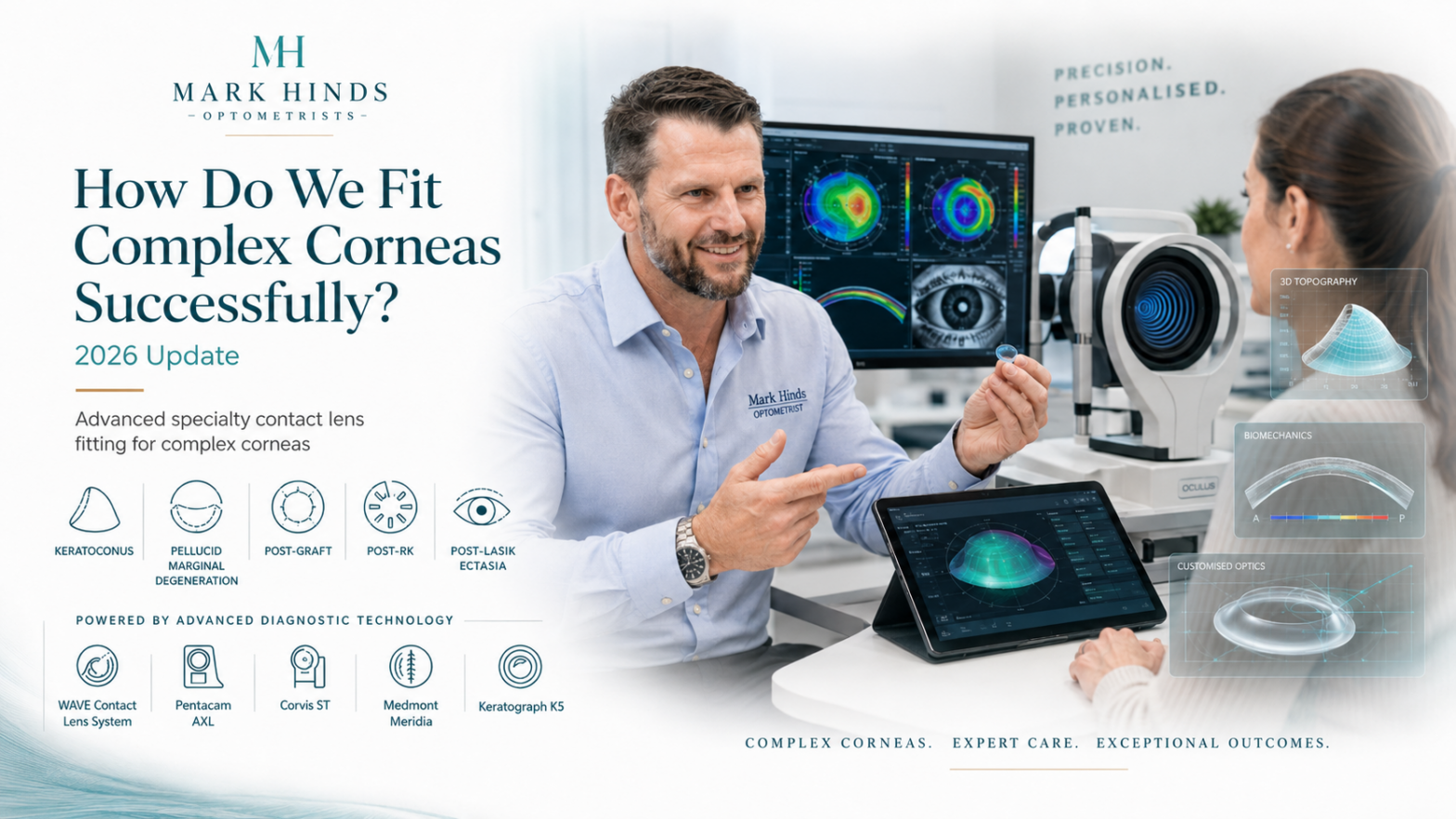
After fitting thousands of eyes with complex contact lenses, we continue to lead the way in 2026. What began years ago with free-form 3D contact lens design has grown into one of the most comprehensively equipped specialty contact lens practices in the country. The result is simple: even the most difficult corneas — keratoconus, pellucid… Continue reading How Do We Fit Complex Corneas Successfully?
How Do We Fit Complex Corneas Successfully?
Author: Mark Hinds
The Latest in Myopia Control Soft Contact Lenses
Myopia (short-sightedness) is rising fast among Australian children, and the good news is that we can now do far more than simply update glasses each year. At Mark Hinds Optometrists, we use evidence-based treatments designed to slow how quickly myopia progresses, protecting your child’s long-term eye health. Soft contact lenses have become one of the… Continue reading The Latest in Myopia Control Soft Contact Lenses
Orthokeratology: Latest Thinking in Myopia Control
Orthokeratology, often called Ortho-K, is one of the most established contact lens options for childhood myopia control. The lenses are worn overnight and gently reshape the front surface of the eye while sleeping. In the morning, the lenses are removed and most patients can see clearly throughout the day without glasses or daytime contact lenses.… Continue reading Orthokeratology: Latest Thinking in Myopia Control
Advancing Care for Patients with Sjögren’s Related Dry Eye Disease
Our care and research: At Mark Hinds Optometrists and Ophthalmic Trials Australia, our team is committed to improving the lives of patients living with severe dry eye disease, ocular surface inflammation, and autoimmune-related eye disease through advanced clinical care, research, and innovation. One important area of focus is Sjögren’s related dry eye disease — a… Continue reading Advancing Care for Patients with Sjögren’s Related Dry Eye Disease
Photo of the Week – Keratoconus and Corneal Crosslinking
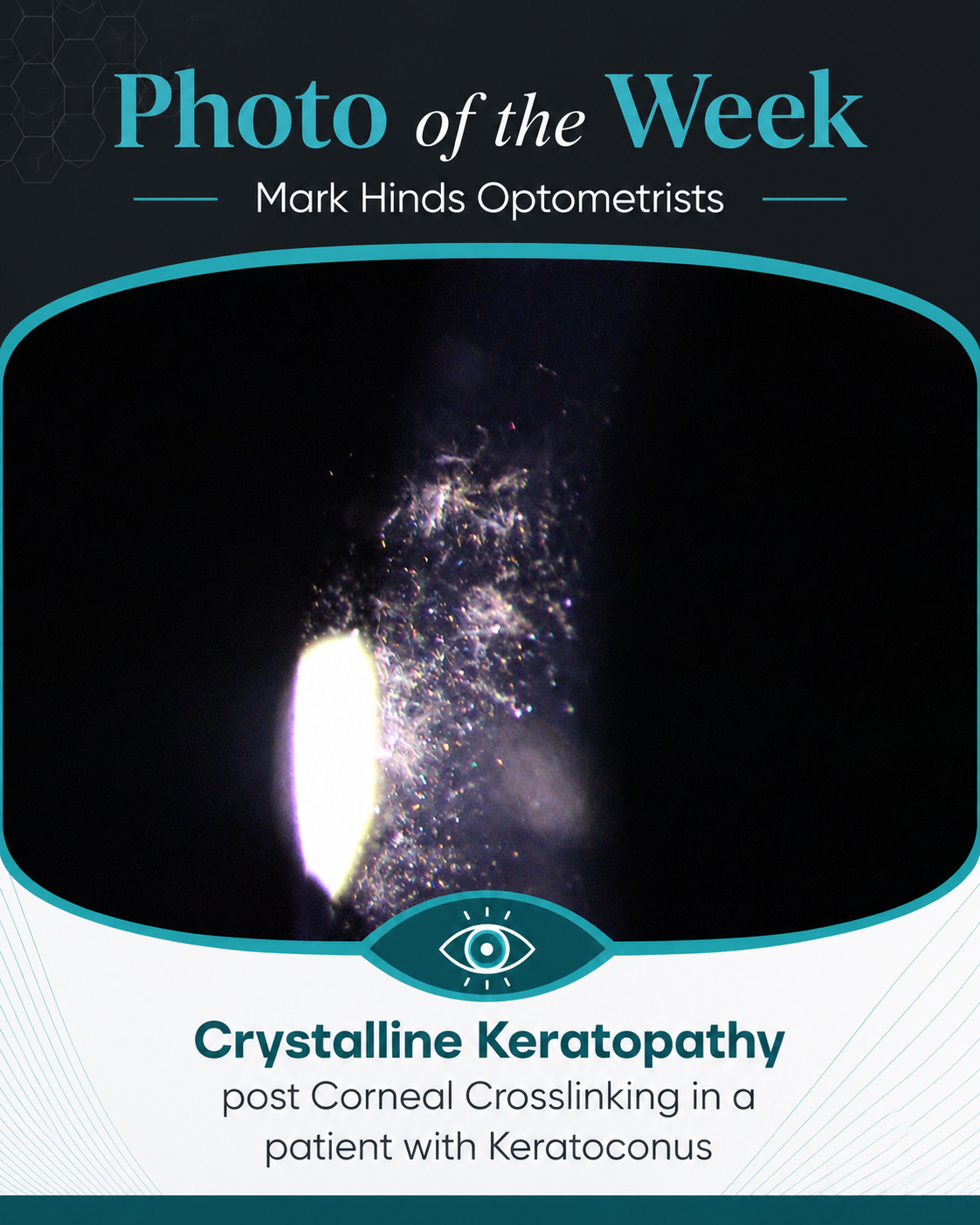
Crystalline keratopathy after corneal collagen crosslinking is not usually caused by the crosslinking reaction itself. It generally comes from one of two mechanisms: sterile drug precipitation or infectious crystalline keratopathy. In an epithelium-off CXL, the epithelial barrier is removed, the anterior stroma is exposed, and a bandage contact lens plus frequent drops are commonly used.… Continue reading Photo of the Week – Keratoconus and Corneal Crosslinking
Corneal Neovascularisation and Scleral Contact Lenses: Why Oxygen Matters
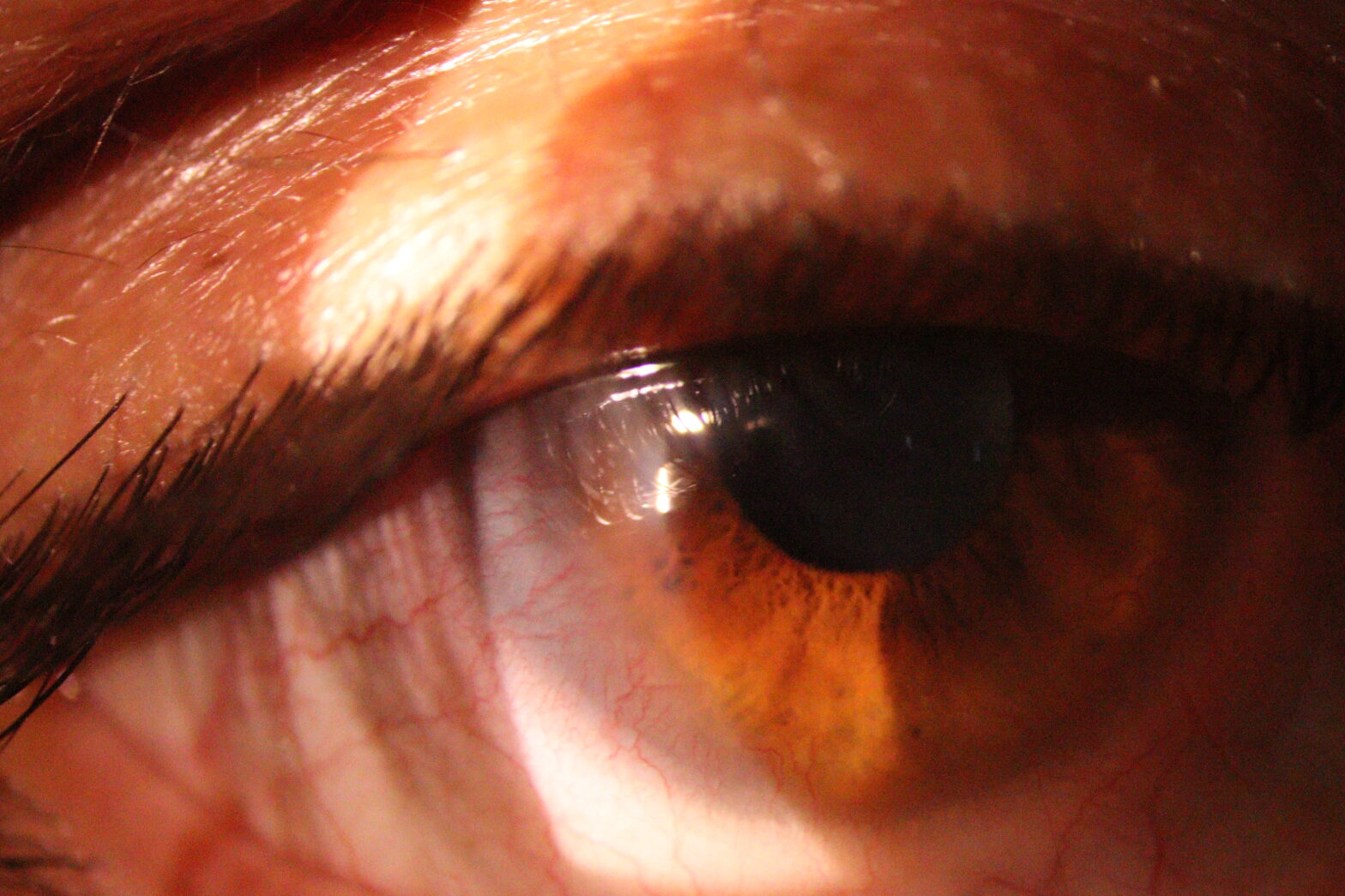
Right eye of a patient showing significant corneal neovascularisation. Left eye of the same patient, without comparable corneal neovascularisation. Corneal neovascularisation refers to the growth of new blood vessels into the cornea. The cornea is normally clear and largely avascular, which is one of the reasons it can transmit light so effectively. When blood vessels… Continue reading Corneal Neovascularisation and Scleral Contact Lenses: Why Oxygen Matters
Scleral Contact Lens Fog
What happens over the day Immediately after insertion, the reservoir is mostly preservative-free filling solution mixed with some basal tears. During wear, several things occur: Does pH change? Probably yes, but direct human data measuring reservoir pH over time is limited. Mechanistically, the post-lens reservoir can drift more acidic because: So the concern is not… Continue reading Scleral Contact Lens Fog
Dr Rebecca Kitson at the J&J Contact Lens Leaders Summit in Sydney May 24-25 2026:

Enables us to be one of the First Practices in Australia to Offer the New J&J Daily Disposable Multifocal Toric Contact Lens At Mark Hinds Optometrists, we are proud to continue leading the way in advanced contact lens technology — becoming one of the first practices in Australia to fit the new Johnson & Johnson… Continue reading Dr Rebecca Kitson at the J&J Contact Lens Leaders Summit in Sydney May 24-25 2026:
Advancing Care for Patients with Ocular Graft-versus-Host Disease (oGVHD)
Our care and research: At Mark Hinds Optometrists and Ophthalmic Trials Australia (OTA), our team is committed to improving the lives of patients living with severe ocular surface disease through research, innovation, and compassionate clinical care. One area of increasing focus is ocular graft-versus-host disease (oGVHD) — a potentially debilitating complication that can occur following… Continue reading Advancing Care for Patients with Ocular Graft-versus-Host Disease (oGVHD)
ARVO 2026 Denver

The team from Mark Hinds Optometrists and Ophthalmic Trials Australia recently attended and presented at the 2026 Annual Meeting of the Association for Research in Vision and Ophthalmology in Denver, Colorado. ARVO remains one of the world’s leading scientific meetings in ophthalmology and vision science, bringing together clinicians, researchers, industry leaders, and innovators from around… Continue reading ARVO 2026 Denver